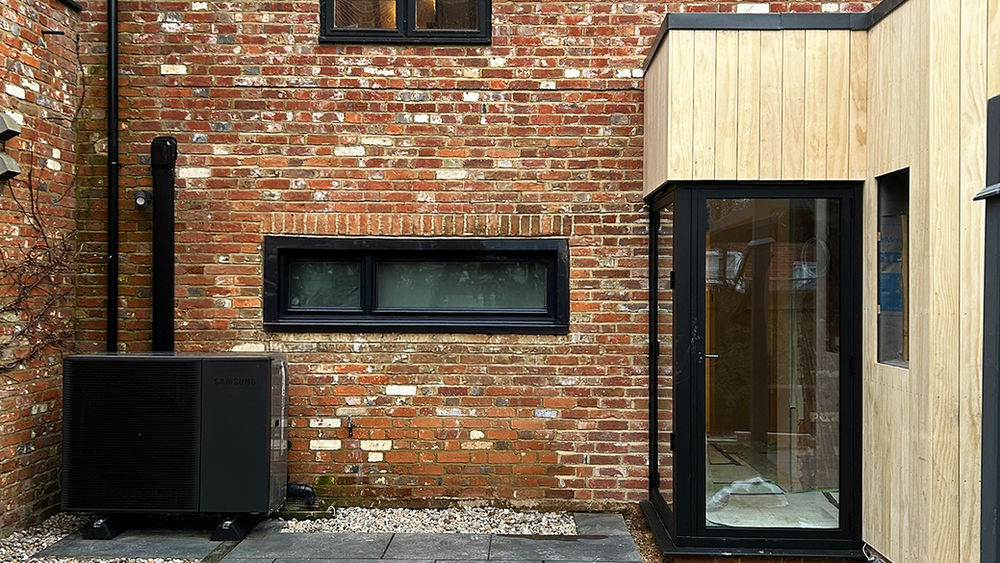
Yes, a heat pump can cool a house, provided it is a reversible model and the system is designed for cooling from the outset. Most British homes were built to keep warmth in, so as heatwaves become more frequent, many homeowners are asking whether the technology that heats their home in January can also cool it in July. This guide explains which systems work, what to expect, what they cost and which grants may apply. It comes from Rawlings Renewables, a family-run, MCS-certified heat pump installer based in Hampshire.
Can a heat pump cool a house? The short answer
Yes, a reversible heat pump can cool a house by moving heat out of the building instead of into it, but not every heat pump is built to do so. It works much as a fridge does, pulling warmth from inside and releasing it outdoors. Heating-only models cannot reverse the process, so cooling must be specified at the quote stage.
Why UK homeowners are asking:
- 40.3°C was recorded in July 2022, the first time the UK passed 40°C (Which?)
- Record heatwaves followed in May, June and July 2026 (Which?)
- By 2050, 92% of existing UK homes could overheat in hotter heatwaves, according to the Climate Change Committee, as reported by The Guardian
How does heat pump cooling work?
A reversible heat pump reverses the flow of its refrigerant, so it draws heat from inside your home and releases it outdoors. The cooling then reaches your rooms in one of three ways:
- Air to air: cooled air blown from wall-mounted, floor-standing or concealed indoor units
- Fan coil units: chilled water passing through convectors with a built-in fan
- Chilled underfloor pipework: water absorbs heat from the room air, with careful condensation control
This is why one system can serve you all year, with one outdoor unit handling both seasons.
Which heat pumps can cool a home?
The ability to cool varies by type:
| Type | How it cools | Best suited to |
|---|---|---|
| Air to air | Reverses like air conditioning, cooling the air in each room | Flats, smaller homes, extensions, homes with electric heating |
| Air to water | Chilled water through fan coil units or underfloor pipework, on cooling-capable models only | Larger homes where cooling is planned at design stage |
| Ground source | Passive cooling from cooler ground temperatures, using a cooling module | Homes with land for ground loops |
Air to air heat pumps
Air to air systems are the most straightforward heat pump for cooling. They work like modern air conditioning, heating in winter and cooling in summer.
- One outdoor unit can serve up to five indoor units (Which?)
- About £1,900 for a single room and about £3,700 for a multi-unit system in a three-bed semi-detached house (Energy Saving Trust)
- Wall-mounted monobloc units need no outdoor unit but serve one room only (Which?)
- Best for flats, smaller homes, extensions and homes already on electric heating
Hot water is not always included, so check before you buy. Our domestic air conditioning service covers installation across the region.
Air to water heat pumps
Cooling is possible on some air to water models, but many cannot do it. This is the most common type in UK homes, replacing gas and oil boilers through radiators and hot water, so cooling must be built into the specification.
- Standard radiators cool poorly, so fan coil convectors or chilled underfloor circuits are needed
- Underfloor cooling needs careful design to prevent condensation on the floor
- A Maidenhead homeowner, reported by The Guardian, added a fan coil to the room that overheats most for about £1,700, within a total upgrade of about £18,600, and kept it near 21°C with 35°C outside
Learn more about our air source heat pump installation.
Ground source heat pumps
Ground source systems can cool when fitted with a cooling module. The ground stays cooler than the outdoor air in summer, so passive cooling uses very little energy, according to manufacturer Kensa. Expect gentle, steady cooling rather than a rapid drop in temperature, and you will need land for the ground loops. See our ground source heat pumps.
How well does heat pump cooling work in UK homes?
It works well when the system suits the property. At the University of Salford’s Energy House 2.0, a heat pump cooling system with fan coils delivered these results:
- 32°C simulated outdoors
- Rooms held between 19°C and 24.9°C
- Roughly £2.50 to £3 for a full day of running
Expect steady, gentle cooling rather than a sudden cold blast. Insulation, glazing and sun exposure all affect the result.
How much does heat pump cooling cost?
Air to air is usually the cheapest route to install, while air to water cooling is quoted property by property. Running costs are efficient, but remember two points:
- If you have no cooling today, using it will add to your annual electricity use (Which?)
- Pairing your system with solar PV can offset daytime use
Savings depend on your home, so no installer can promise a figure.
Is there a grant for a heat pump that cools?
Possibly, depending on the system and where you live. In England and Wales, the Boiler Upgrade Scheme offers:
- £7,500 towards an air to water or ground source heat pump
- £9,000 for eligible off-gas-grid homes replacing oil or LPG, in the window from 21 July 2026 to 31 March 2027
- £2,500 towards an air to air heat pump
Work must be done by an MCS-certified installer. Some reports suggest take-up of the air to air grant is still limited, so confirm the current position with your installer or Ofgem. Our grant guide for oil and LPG homes explains the £9,000 offer.
Questions to ask before you buy
The key question is whether the model is reversible and rated for cooling. Then ask:
- Which emitters will deliver the cooling: air to air units, fan coils or underfloor pipework?
- Is my home insulated and shaded well enough?
- Does the design control condensation?
- What will cooling add to my electricity use?
- Is the installer MCS certified?
Keep your home cooler without overspending
Reduce heat gain first — Which? advises prioritising passive measures before air conditioning. The most effective are:
- External shutters or reflective blinds on sun-facing windows
- Night-time ventilation when the air outside is cooler
- Loft and wall insulation, which keeps heat out as well as in
The lower the load, the less your heat pump works and the less it costs to run.
Heat pump cooling with Rawlings Renewables
Rawlings Renewables can design a system around how your home behaves in both summer and winter:
- Family run, MCS certified and OFTEC registered, and part of Rawlings Fuels
- A room-by-room heat loss survey on every design, never a rule of thumb
- Air conditioning, air source and ground source installations, plus servicing for any make
- Coverage across Hampshire, Surrey, West Sussex, Berkshire and Oxfordshire, including Basingstoke, Winchester, Guildford and Reading
Whether you want heating and cooling in one system or simply a cooler bedroom, we will talk it through honestly. Call 01256 268500 or request a free quote.
Frequently asked questions
Can all heat pumps cool a house? No. Only reversible models can cool, and air to water systems also need suitable emitters. Ask for cooling at the quote stage.
Can air source heat pumps cool? Yes. Air to air units work like air conditioning, and air to water models can cool if specified for it, though many are heating only.
Does a heat pump cool as well as air conditioning? Air to air units use the same technology, so performance is similar. Air to water systems with fan coils give gentler cooling.
Is heat pump cooling expensive to run? It is efficient, but it adds to your electricity use if you had no cooling before. Salford’s test day cost roughly £2.50 to £3.
Is there a grant for a heat pump that cools? In England and Wales, £2,500 for air to air heat pumps through the Boiler Upgrade Scheme, subject to eligibility and an MCS-certified installer.
Sources
- Which?: how a heat pump can cool your home
- Energy Saving Trust: Boiler Upgrade Scheme
- GOV.UK: approved grant categories and values for the Boiler Upgrade Scheme
- Ofgem: Boiler Upgrade Scheme
- Also drawing on Kensa (ground source cooling) and The Cool Down’s reporting of The Guardian, the Climate Change Committee and Salford Energy House 2.0