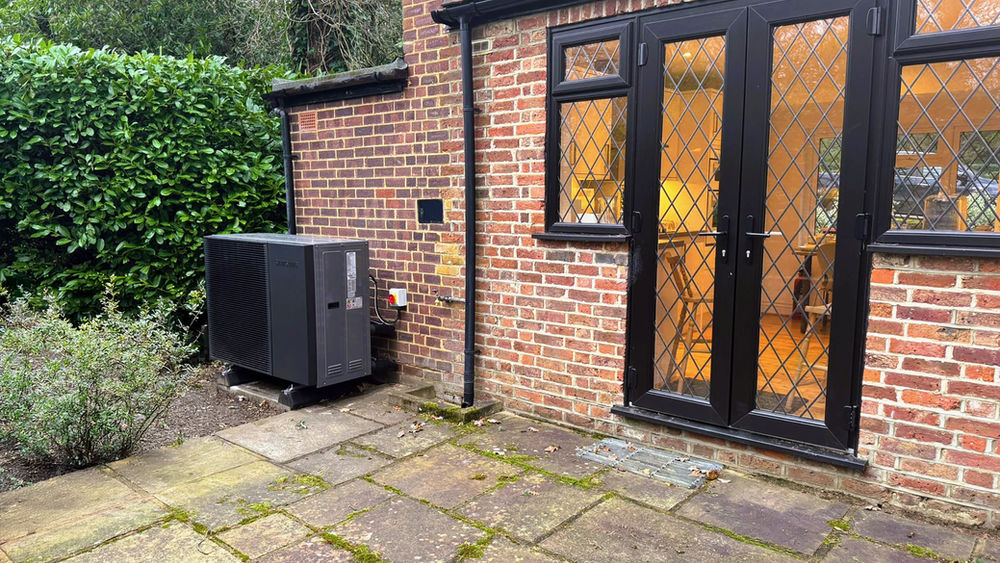
How does a heat pump work in winter? A heat pump collects heat from the outside air, raises its temperature with a compressor and delivers it to your radiators, underfloor heating and hot water cylinder. It keeps doing this even below freezing, so yes — heat pumps do work in winter. The average UK winter temperature sits between 2°C and 7°C, well within the operating range of modern units.
Winter is when heating matters most, so doubts are understandable. This guide uses real UK performance data to explain how heat pumps cope with cold weather, what affects the result and what to ask before you install one.
The short answer
A heat pump works in winter by moving heat rather than creating it. Even cold air contains heat energy. A refrigerant that boils at a very low temperature absorbs that heat, a compressor raises it to a useful temperature, and your heating system releases it indoors.
Zero degrees Celsius is not an absence of heat. Air at −5°C still holds energy that a refrigerant can collect. Because the electricity is only used to move that heat, a heat pump delivers more heat than the electricity it consumes, which a standard electric heater cannot do. Our air source heat pump installation service explains how we design each system.
How an air source heat pump works, step by step
An air source heat pump repeats four stages continuously, much like the cooling circuit in a fridge working in reverse.
- Evaporator: a fan draws outdoor air across a coil. The refrigerant inside boils into a gas at a very low temperature, absorbing heat from the air.
- Compressor: the gas is compressed, which raises its temperature sharply.
- Condenser: the hot gas passes its heat to the water in your heating circuit and turns back into a liquid.
- Expansion valve: the pressure drops, the refrigerant cools and the cycle begins again.
Most UK homes use an air-to-water system, so the heat reaches radiators, underfloor heating and a hot water cylinder.
Do heat pumps work when it is below freezing?
Yes. Air source heat pumps keep working below freezing, with efficiency falling slightly as the temperature drops. The strongest UK evidence comes from the Electrification of Heat Demonstration Project, which monitored real homes from November 2020 to August 2022:
- A median seasonal performance factor of 2.80 for air source heat pumps
- On the coldest days, mean outdoor temperatures ranged from −5.8°C to 2°C, and the mean coefficient of performance was 2.44
- Only a marginal decline in whole-system performance in those conditions
In plain terms, each unit of electricity still produced roughly two and a half units of heat on the coldest days. Online claims about minimum operating temperatures range from −15°C to −40°C, so always check the data sheet for the exact model you are quoted.
A cold-climate heat pump is a model designed to hold its output at lower outdoor temperatures. For most UK homes a correctly sized modern standard unit is sufficient, and the quality of the design matters more than the label on the box.
What is a defrost cycle, and why does my heat pump steam?
A defrost cycle is an automatic routine that melts frost from the outdoor unit, and the steam and water you may see are normal. The unit briefly sends heat to the coil to clear the ice, then resumes heating. You may notice a short pause in heating, a cloud of vapour and water dripping from the base. Keep the condensate drain clear of blockages and ice.
What if my heat pump is not working in cold weather?
When air source heat pump problems appear in cold weather, the cause is usually the installation rather than the technology:
- A system that is too small for the home’s heat loss
- Radiators too small to work at lower flow temperatures
- Airflow blocked by leaves, snow, shrubs or a nearby fence
- A frozen or blocked condensate pipe
If your heat pump is not working, check that it has power and that no error code is showing. Clear the airflow, allow a few minutes for a possible defrost, and do not chip at ice, because the coil is easily damaged. If the fault continues, our heat pump servicing team can help with any make.
How efficient is a heat pump in winter?
A heat pump remains far more efficient than a boiler in winter, although efficiency dips as the weather gets colder. Three terms are used, and they are easy to confuse.
| Measure | What it tells you |
|---|---|
| COP (coefficient of performance) | Efficiency at one moment, at a given outdoor temperature |
| SPF (seasonal performance factor) | Measured efficiency over a full year in a real home |
| SCOP (seasonal coefficient of performance) | A calculated yearly figure under standard test conditions |
The Heat Pump Association reported in January 2025 that the sampled air source heat pumps averaged 293% efficiency, against 84% for a typical fossil fuel system. The Electrification of Heat trial recorded a mean SPF of around 2.81 across 428 installations, while an analysis of 169 systems on HeatpumpMonitor.org between November 2024 and November 2025 found an average of 3.86, linked to low flow temperatures.
The gap is explained by flow temperature — the temperature of the water leaving the heat pump. The lower it can run while keeping rooms comfortable, the less work the compressor does. Those 169 systems were volunteered by owners who track performance, so treat 3.86 as what a well-designed system can achieve, not a promise. We do not guarantee savings, but we can estimate likely performance for your property after a survey.
Why do heat pumps run for longer in winter?
It is normal for a heat pump to run for much of the day in winter, and it is a sign that the system is working as designed. A boiler heats water hot in short bursts, whereas a heat pump delivers gentler heat over longer periods, which is where its efficiency comes from. Most systems also use weather compensation, which raises the flow temperature slightly on colder days and lowers it when it is mild.
The best heat pump settings for winter are simple:
- Set a comfortable room temperature and leave it there
- Avoid large overnight temperature drops
- Ask your installer to set the weather compensation curve
- Resist raising the flow temperature for a small chill
- Schedule hot water for the times you need it
Air source vs ground source heat pumps in winter
Both types work through winter. Ground source heat pumps draw on a steadier heat source, because ground temperatures change far less than air temperatures, but they need land for buried loops and generally cost more to install. Air source systems suit most homes, and MCS data shows that 98% of government-supported installations in early 2025 were air source.
What affects heat pump performance in winter?
The condition of your home affects winter performance more than the weather outside. Two identical units can behave very differently in two different houses, and these factors count most:
- Heat loss and insulation
- Radiator size and the flow temperature it allows
- Correct sizing of the unit — too small struggles, too large cycles too often
- Siting and clear airflow around the outdoor unit
- A suitable hot water cylinder
This is why we complete a room-by-room heat loss survey before recommending any system, rather than sizing from floor area. Book your free survey and we will start there.
How much does it cost to run a heat pump in winter?
A heat pump uses more electricity in winter than in spring or autumn, because heating demand is higher and the air is colder. Whether that costs more or less than your current fuel depends on your system efficiency and the price of electricity compared with gas or oil. A time-of-use tariff can reduce the bill.
Solar PV helps too, although output is lower in winter, so it contributes most in spring and autumn and on bright days. Running costs vary with your home, your system design and your tariff, so we estimate likely costs for your property after a survey.
Heat pump grants for UK homeowners
Homeowners in England and Wales can get £7,500 off an air source or ground source heat pump through the Boiler Upgrade Scheme. For eligible homes replacing oil or LPG heating, the grant is £9,000 for applications made between 21 July 2026 and 31 March 2027.
Your MCS-certified installer applies on your behalf, and the grant is deducted from your quote, subject to eligibility and survey. Scotland has a separate scheme (Home Energy Scotland), and terms can change, so check the Ofgem and GOV.UK pages for the current position. You can also read our guide to the Boiler Upgrade Scheme grant for oil and LPG homes.
Installing in winter: what the evidence shows
Installing a heat pump in winter is common and works well. MCS recorded 4,908 certified installations in January 2025 alone, 21% more than January 2024, and more than 60,000 across 2025 — the most ever in a single year. MCS outreach found a 95% satisfaction rate among customers who used the Boiler Upgrade Scheme, which accounted for 43% of 2025 installations.
One Hampshire homeowner chose the coldest week of winter for their installation. Our team arrived with fan heaters, removed the old oil boiler, tank, cylinder and radiators, and fitted the new system with minimal disruption.
Frequently asked questions
Do heat pumps work in winter in the UK? Yes. Outdoor air still holds usable heat below freezing, and UK winters average 2°C to 7°C, well within the operating range of modern units.
How cold is too cold for a heat pump? There is no single figure, because each model has its own range on its data sheet. On the coldest days in the UK field trial, mean outdoor temperatures reached −5.8°C with only a marginal decline in performance.
Should a heat pump run constantly in winter? It may run for long periods, and that is usually normal. If it runs constantly but the house stays cold, ask an engineer to check the design and settings.
Why does my heat pump stop heating for a few minutes? It is most likely in a defrost cycle, pausing briefly to melt frost from the outdoor coil. Frequent or long pauses justify a service visit.
Is a heat pump cheaper to run than a boiler in winter? It depends on efficiency, tariff and fuel. A heat pump makes more heat per unit of energy, but electricity usually costs more per unit than gas, so well-insulated homes at low flow temperatures do best.
Can I install a heat pump in winter? Yes. Installation can take place at any time of year, and the January 2025 MCS figures show it regularly does. We confirm timescales after your survey.
Thinking about a heat pump?
Rawlings Renewables is a family-run business, MCS certified and OFTEC registered, designing, installing and servicing heat pumps across Hampshire, Surrey, West Sussex, Berkshire and Oxfordshire. We are registered to apply for the Boiler Upgrade Scheme on your behalf. We start with a free survey, design around your home’s real heat loss and handle the grant application — get in touch or call 01256 268500.
Sources and further reading
- Energy Systems Catapult and DESNZ, Electrification of Heat Demonstration Project (November 2020 to August 2022)
- Heat Pump Association, reported by ACR Journal, January 2025
- HeatpumpMonitor.org analysis of 169 air source heat pumps, Energy and Buildings (ScienceDirect)
- MCS Certified: 2025 installation data and Boiler Upgrade Scheme satisfaction outreach
- pv magazine: record start to 2025 (MCS data), and UK government backs more than 180,000 heat pump installations (DESNZ data)